
A newly uncovered video from July 1999 captures Steve Jobs speaking candidly to Apple employees just days after the launch of the wildly successful iBook G3. It offers an unfiltered window into the mind of a CEO who had just pulled a company back from the brink.
1999 Steve Jobs speech reveals Apple strategy after its comeback
For Apple fans and historians alike, the video is a rare artifact that opens a window on a critical time in Apple’s history. It shows us Steve Jobs at his most unguarded, speaking to his own people, in a moment suspended between a near-death experience and what would become one of the greatest corporate resurrections in modern history.
It appears former Apple software engineer Akira Nonaka — who worked at the company from 1991 to 2000 — uploaded the 15-minute recording. The video captures an internal employee gathering at Apple’s Cupertino campus on July 27, 1999. The footage appears never to have been shared publicly before now.
The timing is significant. Jobs had returned to Apple just two years earlier, in 1997. He inherited a company hemorrhaging money and running a product lineup that had grown unwieldy and unfocused.
The speech arrives in the glow of what was, at the time, a genuine triumph. The iBook, Apple’s first consumer laptop in years, came out days earlier at Macworld New York to critical acclaim.
The iBook moment
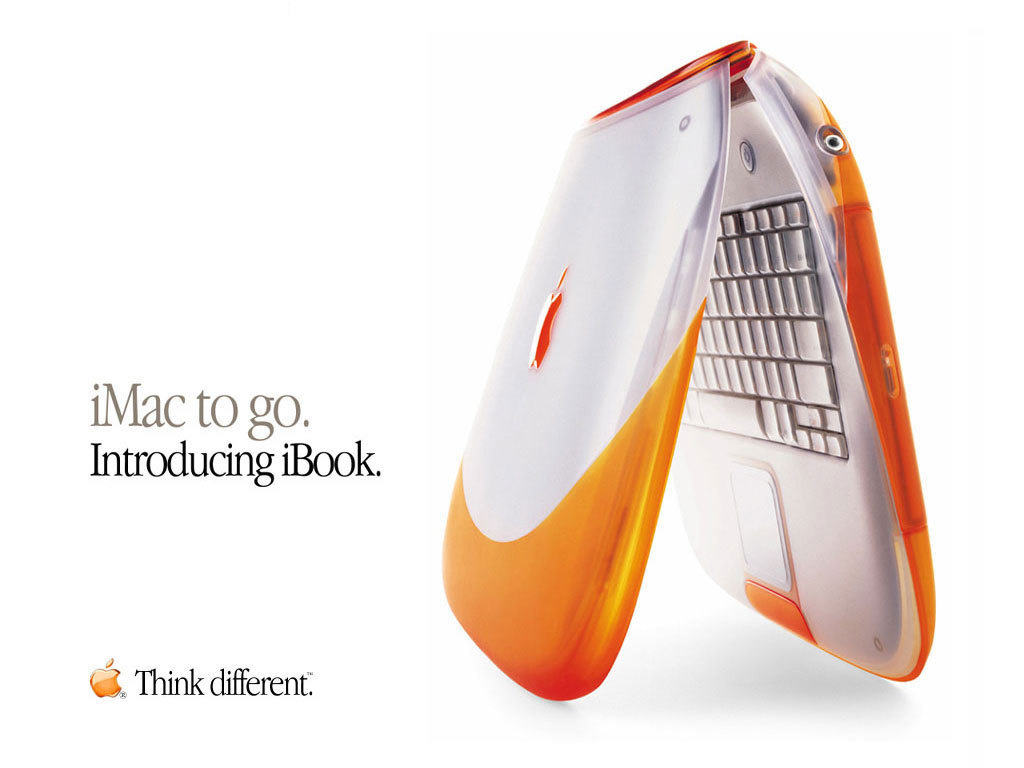
Photo: Apple
Jobs opens the talk on a high, describing the Macworld New York event — which he said drew nearly 50,000 attendees — as a milestone for the company and for the teams who built the product.
“We introduced our iBook and everybody loved it and the show was amazing,” he said. “It was the biggest New York Macworld ever…. You should be really proud of this. Everybody’s just going nuts over it, including our competitors.”
The iBook completed what Jobs described as Apple’s four-quadrant product matrix: consumer and professional, desktop and portable. With the iMac, iBook, Power Mac G3 and PowerBook G3, the Mac lineup finally demonstrated coherence. And, crucially, some of those products were already in their second or third generations.
Watch the Steve Jobs speech video from 1999:
The ‘whole widget’ advantage
A substantial portion of the talk is devoted to AirPort, Apple’s then-new wireless networking system developed in partnership with Lucent. For Jobs, it was more than a product announcement. It was proof of a strategic thesis.
“This is something that people have been dreaming about for over a decade,” he said. “We were able to work with Lucent … to make it a very low-cost product … and do all of the software work to make it all transparent…. It just works.”
The phrase “it just works” lands here like a preview of the Apple to come. Jobs argued that Apple could bring technologies like wireless networking and FireWire to market faster and better precisely because it controlled the entire product — hardware, software and the integration between them. Competitors like Dell and Compaq had to coordinate across multiple independent companies.
“We’re the last company in this business to make the whole widget,” he said. “Let’s go for it and align behind that and bring innovation to the marketplace in a way that when you have to convince five companies, it’s very hard. We can break through those things and bring innovation to customers because we control enough.”
That philosophy — integrated hardware and software, tightly controlled — would go on to define virtually every major Apple product of the next two decades, from iPod to iPhone to Apple silicon chips.
Not about the money
AI image: Chat GPT/Cult of Mac
The speech also touches on Apple’s financial recovery. But Jobs is quick to reframe what the turnaround actually meant to him personally. In a candid moment that cuts against the stereotype of the ruthless Silicon Valley executive, he insists the financial performance was a byproduct, not the goal.
“The reason I came back here had nothing to do with turning Apple around,” he said. “What we love even more is putting these great products out into the world and seeing people use them…. The reason I came back … is to make Apple great again, right?”
Jobs also described a deliberate decision to avoid a head-on challenge to Windows in the enterprise — a market dominated by large corporate IT deployments — and instead double down on the audiences Apple knew best.
“We’re not going to go make a frontal assault on the enterprise … we’re going to go and sell to creative professionals … regain our leadership position in education … and come back in the consumer market with a vengeance,” he said.
A glimpse of things to come
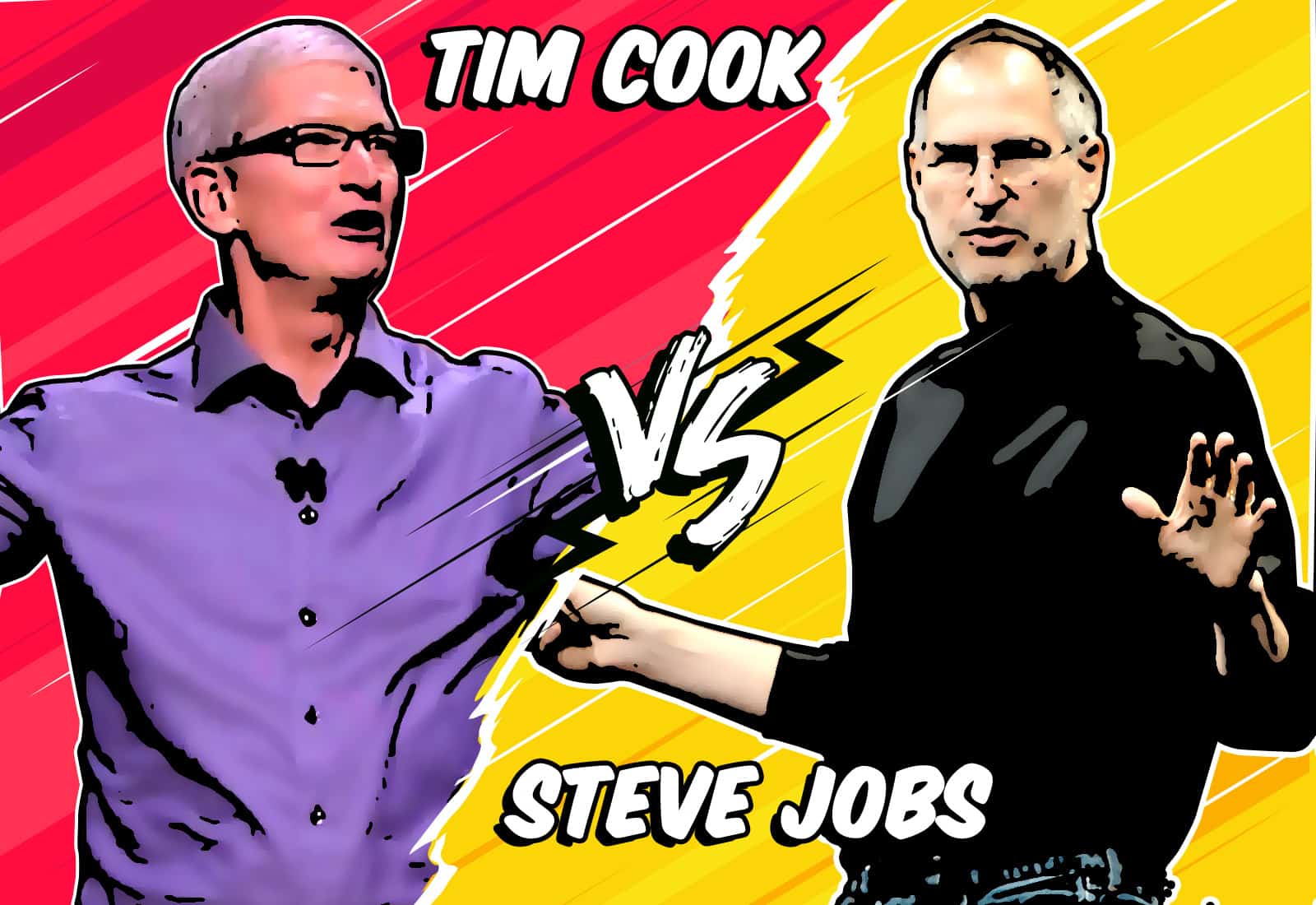
Image: Ste Smith/Cult of Mac
Toward the end of the talk, Jobs teases a product pipeline he describes as “the best stuff I’ve ever seen in my life.” He offers a tantalizing hint that, in retrospect, almost certainly pointed toward Mac OS X and the iPod. They both would arrive within the next two years and reshape the consumer technology industry.
The speech is also notable for an offhand remark about operational excellence. Jobs boasted that Apple had achieved standards “even better than Dell.”
That’s a pointed reference to a company then widely regarded as the gold standard in supply chain management. And it was around this same time that Tim Cook, who would eventually succeed Jobs as CEO, joined Apple as senior vice president of worldwide operations. (See also: Tim Cook vs. Steve Jobs: Who is Apple’s best CEO ever?)

David Snow, an expert on Apple hardware and software, writes on a variety of technological and cultural topics for Cult of Mac. They include Apple news, technology buying guides, and features about computer setups and Apple TV shows and movies.
With 30 years of experience covering technology and other subjects, he has written and edited for numerous print and online publications, including CMP Media, TechTV.com, CNET, Wired News, Red Herring magazine, Law.com, The National Law Journal and Law Technology News magazine. Among other roles, he served as executive editor of the Law.com network of websites and editorial director, technology, for ALM Media.
Snow graduated with a B.A. from Syracuse University with majors in magazine journalism and psychology. While there, he worked as a reporter for The Daily Orange newspaper and associate editor of Equal Time magazine.
Founder of the blog At the Waterline, he can be reached on X (formerly Twitter) via @atthewaterline and on Mastodon via @dsnow.

